Choosing between TPO and EPDM is one of the most common decisions commercial property owners face at re-roof time. Here's how to make the right call for your building type and budget.
What Is the Core Difference Between TPO and EPDM?
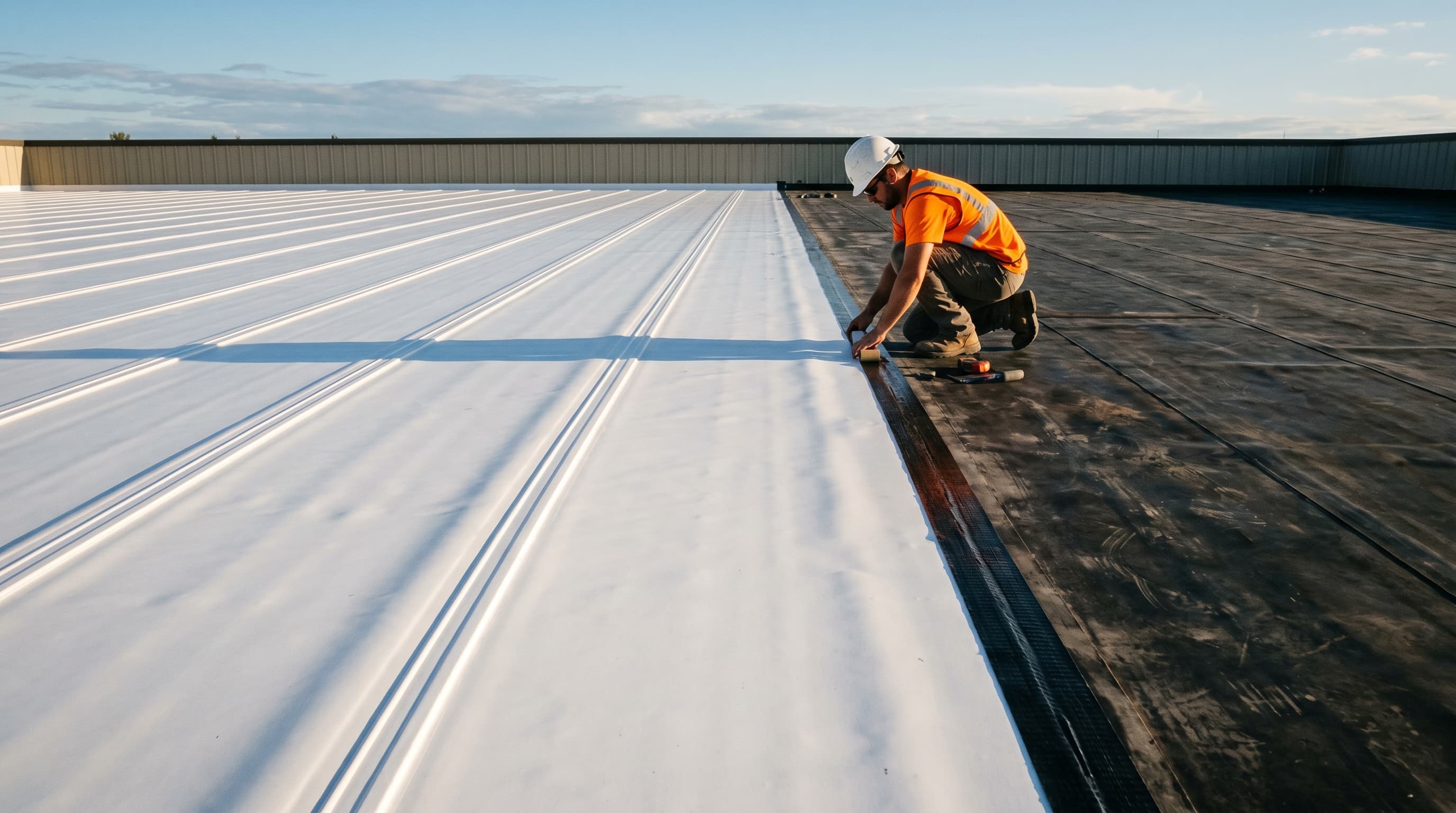
TPO (Thermoplastic Polyolefin) and EPDM (Ethylene Propylene Diene Monomer) are both single-ply membranes that dominate commercial flat roofing — together they account for roughly 70% of all low-slope commercial roofs installed in the United States. The fundamental difference is seaming: TPO is heat-welded, creating a bond stronger than the membrane itself, while EPDM relies on adhesive tape or liquid-applied adhesives at seams, which are historically the system's most vulnerable point.
TPO is also a reflective white or light-gray membrane, meeting ENERGY STAR requirements out of the box. EPDM is classically black, absorbing heat — though white-coated and gray EPDM options exist. For Kansas City buildings with significant air-conditioning loads, that reflectivity difference can translate directly to utility savings.
Which Membrane Performs Better in Kansas City's Climate?
Kansas City experiences wide temperature swings — summer highs above 95°F and winter lows that push below 0°F, combined with hail, ice, and periodic severe storms. Both membranes handle this range, but they handle it differently.
TPO's heat-welded seams remain tighter through thermal cycling (expansion and contraction from temperature swings). EPDM adhesive-based seams can creep over decades of cycling, particularly on larger roofs where cumulative movement is greater. TPO's white surface also reflects radiant heat in summer, which is a meaningful benefit for warehouses and buildings with high air-conditioning costs in KC's humid summers.
EPDM has a genuine advantage in extreme cold installation: it stays flexible at lower temperatures than TPO, making it the preferred membrane for winter projects where job-site temperatures drop below 40°F and roofing can't wait for spring.
- TPO: superior thermal cycling performance — heat-welded seams stay tight
- EPDM: more flexible at cold temps — better for mid-winter installs
- TPO: white surface cuts summer cooling loads in Kansas City's humid climate
- EPDM: black membrane can increase winter heat gain, slightly offsetting heating costs
- Both: resistant to hail and wind uplift when properly fastened
How Do TPO and EPDM Compare on Cost?
As a rule of thumb for commercial projects in the Kansas City metro, TPO typically runs $0.25–$0.50 per square foot more than EPDM in material cost, but the gap narrows when you account for the energy savings from TPO's reflective surface. On a 50,000-square-foot warehouse roof, the reflectivity benefit alone can offset that difference within five to seven years through reduced cooling costs.
EPDM remains the preferred choice for budget-constrained re-roofs on buildings with lower HVAC loads — particularly industrial or storage facilities without climate control. If a building is predominantly heated rather than cooled, EPDM's slightly lower upfront cost wins on a pure dollar basis.
What's the Expected Lifespan of Each System?
A properly installed and maintained TPO roof should last 20–30 years in Kansas City conditions. EPDM with proper maintenance also targets 20–25 years, though field experience suggests that EPDM seams — if installed with adhesive-only bonding rather than tape — often require attention after 15–18 years due to adhesive degradation. Factory-welded EPDM seams (available on pre-fabricated large-format sheets) perform comparably to TPO over time.
Both systems are extended significantly by regular maintenance programs. An annual inspection and minor repair program can add 5–10 years to either membrane's service life — making the maintenance investment one of the highest-ROI decisions a property manager can make.
Which System Is Better for Large Flat Roofs on Warehouses or Distribution Centers?
For large commercial footprints — warehouses, distribution centers, manufacturing facilities, and big-box retail — TPO is the more commonly specified membrane for new construction and re-roofing in the Kansas City region for four reasons: the energy code reflectivity requirements that many jurisdictions now require, heat-welded seam strength that scales better across large areas, faster installation on large surfaces, and long-term warranty programs from manufacturers like Carlisle, Versico, and Johns Manville that Evangel is certified to install.
EPDM remains a strong choice for low-pitch agricultural or industrial buildings, cold-storage facilities, and projects where the owner has an established EPDM system they want to maintain rather than swap technologies.
Can EPDM Be Replaced With TPO on an Existing Roof?
Yes — TPO can be installed over a prepared EPDM surface in many situations, though this depends on the condition of the existing membrane and the structural loading capacity of the building's deck. A qualified commercial roofing inspector will evaluate whether the existing EPDM can serve as a substrate layer or whether a full tear-off is required. Evangel performs on-site assessments at no charge for commercial properties within 150 miles of Kansas City to determine which path is appropriate for your specific building.
Frequently Asked Questions
Is TPO better than EPDM for commercial buildings?
For most Kansas City commercial buildings — especially those with significant cooling loads, large footprints, or new construction — TPO is the preferred choice due to its reflective surface, heat-welded seam strength, and strong manufacturer warranty programs. EPDM remains competitive for budget re-roofs, cold-climate installations, and buildings with lower energy sensitivity.
What is the lifespan of EPDM roofing on a commercial building?
A properly installed and maintained EPDM roof typically lasts 20–25 years. The adhesive seams are the most common failure point; ballasted or fully-adhered systems with regular inspections often exceed 25 years in Midwest climates.
Why do most new commercial buildings use TPO?
TPO's white reflective surface meets ENERGY STAR and many modern energy code requirements. Heat-welded seams outperform adhesive EPDM seams in long-term performance, and TPO manufacturers now offer 30-year warranties not available on traditional EPDM systems.
Can I install TPO over an existing EPDM roof?
In many cases, yes — if the EPDM substrate is in acceptable condition and the building deck can handle additional load. A professional assessment is required before proceeding. Evangel provides free on-site assessments for qualified commercial properties within 150 miles of Kansas City.