
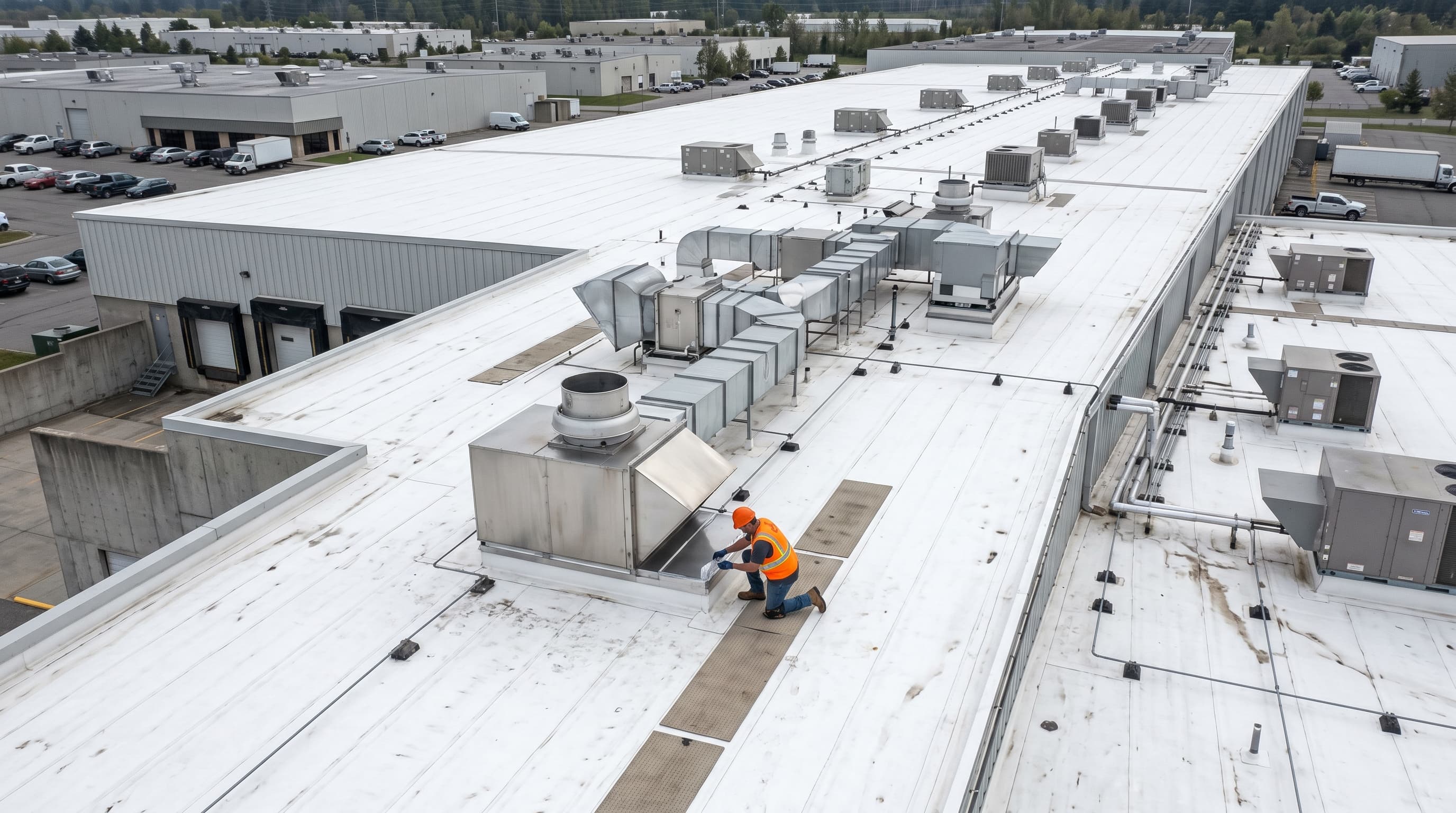
Overview
Polyvinyl Chloride (PVC) membranes offer superior resistance to animal fats, grease, and a wide range of industrial chemicals — making them the specified choice wherever rooftop exhaust or drainage contains contaminants that degrade standard TPO. PVC is also inherently fire-resistant and carries Class A fire ratings without additional surfacing. Like TPO, PVC uses hot-air welded seams for waterproof continuity across the entire field.
Key Benefits
- Resists degradation from grease, oils, fats, and industrial chemicals
- Inherent Class A fire resistance — no additional surfacing needed
- Hot-air welded seams provide watertight, durable lap joints
- Flexible in cold temperatures — less prone to brittle cracking during winter installation
- Long track record: PVC has been in commercial use since the 1960s
- Widely accepted by code in restaurant, food processing, and chemical plant applications
Best Suited For
Restaurant chains, food processing plants, cafeterias, grocery distribution centers, and any facility with rooftop exhaust carrying grease-laden air.
Technical Specifications
- Typical Thickness
- 50 – 80 mil
- Fire Rating
- Class A (UL 790 / ASTM E108)
- Chemical Resistance
- Fats, oils, greases, mild acids
- Seam Method
- Hot-air welded
- Plasticizer Type
- Non-migrating formulations available
- Warranty Options
- 10 – 20 years
Need a PVC Membrane estimate?
Evangel provides free on-site assessments for qualified commercial properties within 150 miles of Kansas City.
Request a Free Estimate